In our mild climate, both systems heat well. At average 2026 rates, gas costs a little less per unit of heat. A heat pump pulls ahead when you need new cooling anyway, when you have solar, or when you want one system instead of two.
How a Heat Pump and a Gas Furnace Heat Your Home
A gas furnace burns natural gas inside a sealed chamber. That flame heats a metal heat exchanger, and a blower pushes air across it and into your ducts. Efficiency is rated as AFUE. An 80% furnace turns 80 cents of every gas dollar into heat, while a high-efficiency model reaches 96% or more. Since a furnace only heats, most homes pair it with a central air conditioner.
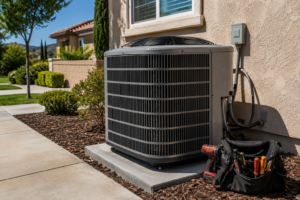
A heat pump works like an air conditioner running in reverse. In winter, it pulls heat out of the outdoor air and moves it inside. Even 40-degree air holds plenty of heat to harvest. Because the system moves heat instead of making it, it can deliver two to four units of heat for each unit of electricity in mild weather. Then in summer, the same equipment cools your home.
Do I Have a Heat Pump or a Furnace?
Many homeowners aren’t sure, and it’s easy to check. Try these three quick tests:
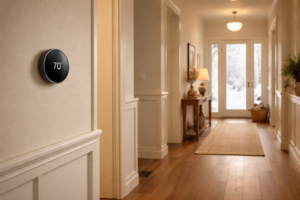
- Look at the thermostat. A setting labeled “EM Heat,” “Emergency Heat” or “Aux” usually means a heat pump.
- Listen to the outdoor unit in heat mode. If it runs while the heat is on, you have a heat pump. If it stays quiet, your heat comes from a furnace.
- Find the indoor unit. A gas line and a metal flue pipe running to the roof point to a gas furnace.
Plenty of local homes have both: a gas furnace inside and an air conditioner outside. That setup matters, because it opens the door to dual fuel. We cover that option below.
Heat Pump vs Furnace Cost: What Heat Costs at 2026 Rates
At average 2026 rates, a high-efficiency gas furnace makes heat a little cheaper than a heat pump in Southern California Edison territory. However, the gap is small, and your rate plan can flip it.
To compare fairly, we priced the same amount of heat: 100,000 BTU. That’s one therm of gas, or about 29.3 kWh of electricity. We used SCE’s average residential rate of 34.4 cents per kWh and SoCalGas’s average residential rate of $2.10 per therm.
System | Efficiency | Cost for 100,000 BTU of heat |
|---|---|---|
Gas furnace, high-efficiency | 96% AFUE | $2.19 |
Heat pump, mild night | COP 4 | $2.52 |
Gas furnace, standard | 80% AFUE | $2.63 |
Heat pump, colder night | COP 3 | $3.36 |
COP stands for coefficient of performance: the units of heat a heat pump delivers per unit of electricity.
These are averages, so treat them as a starting point. Gas prices often climb in winter. On the other hand, time-of-use plans and rooftop solar can cut a heat pump’s cost a lot. To run your own numbers, pull the rates off your last SCE and SoCalGas bills.
Running cost is only half the story, though. Our winters are short, so the yearly gap in heating bills tends to be modest. Upfront price often matters more. When you compare quotes, set a heat pump against a furnace plus a new air conditioner, not against a furnace alone.
Is a Heat Pump More Efficient Than a Gas Furnace?
Yes, by a wide margin. Even the best gas furnace turns a unit of fuel into slightly less than one unit of heat. A heat pump in mild weather delivers two to four units of heat per unit of electricity. In other words, it runs at 200% to 400% efficiency.
Still, higher efficiency doesn’t always mean a lower bill. Electricity in California costs more per unit of energy than natural gas. That’s why the cost table above is closer than the efficiency numbers suggest. For more on weighing efficiency against your bills, see our post on how high-efficiency units can lower your electric bill.
Do Heat Pumps Work in Ventura County Winters?
Yes. Heat pumps are a natural fit for our climate. Winter nights in Moorpark, Simi Valley and Thousand Oaks usually bottom out around 40 degrees, and hard freezes are rare. Modern variable-speed heat pumps keep heating well below freezing, so a cold snap won’t leave you stuck.
What changes is how the heat feels. A furnace sends out short blasts of hot air. By contrast, a heat pump runs longer at a lower, steadier temperature, so the air feels warm rather than hot. Some people love the even comfort. Others miss the blast of heat on a chilly morning.
On damp mornings, you may also see the outdoor unit pause and give off a little steam. That’s a normal defrost cycle, and it usually lasts only a few minutes.
Dual Fuel: Can You Have a Heat Pump With a Gas Furnace?
Yes. A dual fuel system pairs an outdoor heat pump with an indoor gas furnace. Carrier calls this setup Hybrid Heat. The thermostat chooses the heat source based on the outdoor temperature. On mild days the heat pump does the work, and on the coldest nights the furnace takes over.
Dual fuel makes the most sense in two cases:
- Your furnace still has life, but your AC is failing. Replace the air conditioner with a heat pump and keep the furnace. As a result, you get new cooling plus a second, efficient heat source.
- You want efficiency without giving up gas. The heat pump handles most of the winter, and the furnace’s hot air is there when it’s cold.
A good installer sets the switch-over point using your actual gas and electric rates. That way, the system runs on the cheaper fuel for the conditions.
Can a Heat Pump Replace a Furnace?
In our climate, yes, completely. A heat pump can heat the whole home without gas. In most homes it uses your existing ductwork, as long as the ducts are sized and sealed well. Indoors, an air handler or fan coil takes the furnace’s place.
There are a few things to check first. Backup electric heat strips add electrical load, so your panel may need a look. Leaky or undersized ducts will hurt any new system, so fix those before you upgrade. And if you go all-electric, the gas line to the furnace can be capped.
If your furnace is showing its age, our guide to the signs you need a new furnace can help you decide whether replacement is due.
2026 Rules and Incentives That Affect Your Choice
A few changes are worth knowing before you buy:
- The federal tax credit is gone. The 25C Energy Efficient Home Improvement Credit only covers equipment placed in service through 2025, according to the IRS. Don’t build your budget around it.
- Ventura County may tighten furnace rules. The Ventura County Air Pollution Control District has proposed an ultra-low NOx limit of 14 ng/J for new and replacement gas furnaces. As proposed, it would apply to furnaces sold or installed on or after December 8, 2027, and a board hearing is set for December 8, 2026. Existing furnaces can stay in use. We already install ultra-low NOx Carrier furnaces.
- Refrigerants have changed. New heat pumps and air conditioners use lower-impact refrigerants such as R-454B. Our post on the 2026 AC refrigerant change explains what that means for older systems.
- Rebates come and go. Utility and state programs open and close during the year. Ask what’s available when you get a quote.
How to Choose: A Quick Checklist
If this sounds like your home | Look closely at |
|---|---|
Both your furnace and AC are near the end of their life | A heat pump or a dual fuel system |
Your furnace is newer, but your AC is failing | Dual fuel: a heat pump paired with your furnace |
You have solar, or plan to add it | A heat pump |
You want to go all-electric | A heat pump |
Your AC is newer and you prefer hotter air | A new high-efficiency gas furnace |
Rooms heat unevenly, or the ducts are old | A duct check before any new equipment |
Frequently Asked Questions
Is a heat pump cheaper to run than a gas furnace in California?
Not always. At average 2026 SCE and SoCalGas rates, a high-efficiency gas furnace costs slightly less per unit of heat. A heat pump can come out ahead on a time-of-use plan or with solar.
Does a heat pump work during a power outage?
No. But a gas furnace doesn’t either, because its blower, igniter and controls need electricity.
How long does a heat pump last?
About 10 to 15 years is typical with regular care. Heat pumps run in both summer and winter, so they wear more like an air conditioner than a furnace. A maintenance plan with spring and fall tune-ups helps them last.
Do I need new ductwork for a heat pump?
Usually not. Most heat pumps connect to existing ducts. However, ducts that leak or are too small should be fixed first.
Get an Honest Recommendation
Stuart Rose Heating & Air Conditioning has installed heating and cooling systems across Ventura and Los Angeles County since 1973. As a Carrier dealer, we install variable-speed heat pumps and dual fuel systems, plus ultra-low NOx gas furnaces. Our technicians aren’t on commission, so you get a straight answer about what fits your home.
We offer free on-site estimates for new systems and can walk you through financing options. Call us at (805) 590-4111 or schedule a visit online.