A Homeowner’s Guide to Replacing at the Right Time
Some furnaces “die” loudly, no heat, odd smells, alarms, the whole house goes cold. Others fade out quietly, costing you comfort and money for months before the breakdown finally forces your hand. In Thousand Oaks, where evenings can cool off fast and homes often rely on dependable heat during winter nights, the best furnace replacement is the one you plan before you are stuck in an emergency call cycle.
This guide covers the most reliable signs your furnace is nearing the end, how to tell repairable problems from replacement problems, and what to do next.
First, the safety line you never cross
If you smell gas, feel dizzy or nauseous when the heat is running, see soot around vents, or a carbon monoxide alarm goes off: treat it as urgent. Shut the system off, ventilate if safe, leave the home if needed, and contact emergency services or an HVAC professional in Thousand Oaks.
Also, if you have a standing pilot light and it is yellow (not blue), that is a warning sign that needs professional attention.
12 signs your furnace is telling you it is time
1) Your furnace is 15 to 20 years old (or older)
Age is not everything, but it is the strongest predictor. Many competitors cite 15 to 20 years as the typical replacement window, and for good reason: efficiency drops, parts wear, and repairs become more frequent.
Rule of thumb: If your unit is in that range and you are seeing multiple issues below, start planning replacement, even if it still runs today.
2) Repairs are happening more often (or the same problem keeps coming back)
One repair in a decade is normal. Multiple repairs in a short period usually means the system is in its “wear-out” phase.
Watch for repeats: Ignitors, flame sensors, control boards, blower motors, and limit switches that fail again can be a clue the system is stressed overall.
3) Repair costs are climbing toward “replacement territory”
Some competitors use a simple benchmark: if a repair is more than 50% of the replacement cost, replacement is often the smarter move.
A more practical homeowner framework:
-
If the furnace is older and the repair is expensive, put the money into a new system you can rely on.
-
If the furnace is newer and the repair is straightforward, repair usually wins.
4) Your heating bills rise even though your habits did not change
A steady increase often means the furnace is losing efficiency and running longer to do the same work.
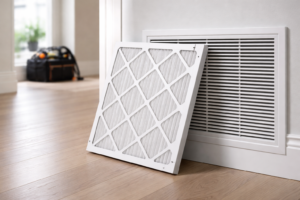
Quick sanity-check: Replace the air filter first and make sure supply vents are open. If bills still climb, it is time for deeper diagnostics.
5) Uneven heating: cold rooms, hot rooms, and constant thermostat fiddling
Inconsistent comfort is one of the most common “replace vs repair” triggers in Thousand Oaks.
It can be caused by duct issues, airflow restrictions, or an aging furnace that cannot maintain steady output anymore. Even if you do replace, a good contractor should confirm whether airflow and duct sizing are part of the problem so you do not install a new furnace into the same bottleneck.
6) Weird noises that were not there before
Banging, rattling, squealing, popping, humming, and screeching are frequently listed as end-of-life symptoms.
What they often mean:
-
Rattling/banging: loose components, blower issues, or ignition problems
-
Squealing: belt or motor bearings (older designs)
-
Popping: duct expansion can be normal, but new or violent pops can also signal airflow stress
7) Burning odors, musty smells, or “hot metal” smells that persist
A brief dusty smell at the first heat cycle of the season can be normal. Persistent odors are not.
Potential causes range from overheating components to wiring problems to airflow restriction. Because odor can be safety related, treat it as a “stop and check” moment.
8) Excess dust or soot, especially near registers
Some competitors call out soot near grilles and registers as a warning sign because it can be associated with combustion issues and potential carbon monoxide risk.
Also note: excessive dust can be from duct leakage or filtration issues, so the best outcome is an inspection that evaluates the whole system (furnace + airflow + filtration).
9) Short cycling: the furnace turns on and off constantly
This is one of the most overlooked symptoms. Short cycling reduces comfort, increases wear, and can point to overheating, sensors, improper sizing, or airflow problems.
If your furnace runs in frequent bursts instead of steady cycles, it is worth diagnosing soon. Even when it is repairable, the pattern tends to accelerate wear over time.
10) The furnace struggles to maintain temperature on colder nights
If it “runs forever” yet the house still feels chilly, you might have:
-
declining furnace capacity
-
airflow restrictions
-
duct leakage
-
thermostat placement issues
-
insulation and envelope problems
“system struggles to maintain comfortable temperatures” is a consistent replacement indicator.
11) Visible rust, corrosion, or cracks on or around the unit
Visible deterioration is often listed as a sign replacement should be on the table.
Important: Cracks in a heat exchanger are a serious safety concern. This is a professional diagnosis item, not a DIY check.
12) Your pilot light is yellow (for older furnaces with a standing pilot)
A yellow pilot flame is widely cited as a warning sign because it can indicate combustion problems.
Repair or replace: a simple decision scorecard
Use this quick scorecard to decide what direction you are leaning before you call a pro:
Replacement starts to make more sense when:
-
Age is 15+ years
-
Repairs are frequent
-
You have uneven heating or comfort complaints
-
Bills keep rising
-
Safety flags appear (CO alarm, soot, yellow pilot)
-
A major repair approaches a large fraction of replacement cost
Repair may be the better move when:
-
Furnace is under 10 to 12 years and generally reliable
-
The issue is clearly isolated (thermostat, capacitor, ignitor, sensor, minor airflow correction)
-
You have not had a pattern of recurring breakdowns
What to check tonight (safe, homeowner-friendly)
Before spending money, do these basics. They solve a surprising number of “no heat” calls:
-
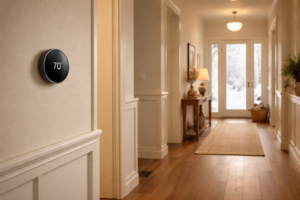
Thermostat: confirm it is set to HEAT and the setpoint is above room temp. Replace batteries if applicable.
-
Filter: if it is very dirty, replace it. Restricted airflow can cause overheating and shutdowns.
-
Vents: make sure key supply vents are open and not blocked by furniture or rugs.
-
Breaker and furnace switch: verify power is on.
-
Error code (if your furnace has a panel window): take a photo of the flashing code for the technician.
If you smell gas, see soot, or have CO symptoms, do not troubleshoot. Treat it as urgent.
If you do replace, what should a good quote include?
A high-quality replacement is not just “swap the box.” Ask for clarity on:
-
Load sizing: confirming the furnace is sized for your home, not just matching the old unit
-
Airflow and duct evaluation: static pressure, duct leakage concerns, and comfort balancing
-
Efficiency options: what you get at different efficiency levels and how that affects operating cost
-
Thermostat and controls: compatibility, staging, and comfort features
-
Permits and safety testing: combustion analysis (for gas), CO safety checks, and final verification
-
Warranty and maintenance plan: what is covered and what maintenance keeps coverage valid
The bottom line for Thousand Oaks homeowners
If your furnace is older, needs frequent repairs, struggles to heat evenly, or shows any safety red flags, Furnace replacement planning is usually the smartest path. The goal is not just “heat again,” it is steady comfort, lower stress, and a HVAC system you trust when temperatures drop at night.