Why Is My AC Blowing Warm Air? 7 Causes Conejo Valley Homeowners See Every July
When an air conditioner blows warm air, the cause is almost always one of three things: the system is not getting proper airflow, it is not moving refrigerant correctly, or a key electrical component has failed. Some of these you can check yourself in five minutes. Others require a licensed technician with gauges and a meter.
Every July, when temperatures in Thousand Oaks, Simi Valley, and Moorpark push into the 90s and beyond, our phones light up with the same call: “The AC is running, but the air coming out of the vents is warm.” After 50 years of servicing homes from Moorpark to Malibu, we can tell you the diagnosis usually lands on one of seven causes. Here they are, in the order we check them.
First, Rule Out the Easy Stuff
Before you assume the worst, check two things at the thermostat.
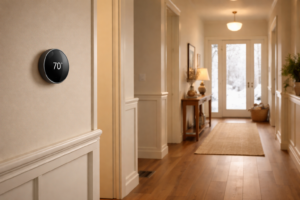
Make sure the system is set to COOL, not HEAT, and that the setpoint is below the current room temperature. It sounds obvious, but a houseguest, a kid, or a smart thermostat schedule can change settings without you knowing.
Then check the fan setting. If the fan is set to ON instead of AUTO, the blower runs continuously, even between cooling cycles. During those gaps, it pushes room-temperature air through the vents, which feels warm by comparison. Switch it to AUTO and see if the problem resolves.
If the thermostat checks out, move on to the seven real culprits.
1. A Clogged Air Filter Is Choking Your Airflow
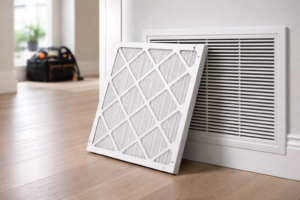
A dirty filter is the single most common cause of weak or warm airflow we find on service calls. When the filter clogs, the blower cannot pull enough return air across the evaporator coil. The coil gets too cold, ice forms on it, and airflow drops even further. Eventually you get a system that runs constantly while the house gets warmer.
Conejo Valley homes deal with real dust loads, especially in summer when dry winds kick up. If you have not changed your filter in 60 to 90 days, pull it out and hold it up to a light. If you cannot see light through it, replace it.
If the filter was severely clogged, shut the system off at the thermostat and run the fan only for a few hours. This lets a frozen evaporator coil thaw before you restart cooling. If the coil refreezes with a clean filter installed, you likely have an airflow or refrigerant problem that needs professional diagnosis.
2. Low Refrigerant Charge From a Leak
Refrigerant does not get “used up.” If your system is low on charge, it has a leak, and simply topping it off is a temporary patch, not a repair. A low charge causes the evaporator coil to run too cold and freeze, or leaves the system unable to absorb enough heat from your indoor air. Either way, the result is warm air at the registers, often paired with a hissing sound or ice on the copper lines at the outdoor unit.
Diagnosing charge correctly requires measuring superheat and subcooling with gauges, which is why this one is not a DIY fix. Refrigerant handling also legally requires EPA 608 certification.
One more wrinkle for 2026: if your system runs R-410A, refrigerant costs are climbing as the industry transitions to R-454B. A significant leak on an older system can shift the repair-versus-replace math quickly. We covered the full transition in our guide to the 2026 AC refrigerant change, and it is worth reading before you approve a large refrigerant repair.
3. A Failed Capacitor (The Classic Heat Wave Breakdown)
The run capacitor gives your compressor and condenser fan motor the electrical jolt they need to start and keep running. Capacitors are the number one component failure we see during July heat waves, because heat is exactly what kills them. Sustained triple-digit attic and pad temperatures degrade a weak capacitor fast.
The telltale sign: your indoor blower runs and pushes warm air, but the outdoor unit is silent, or it hums and clicks without the fan spinning. Sometimes the outdoor fan runs but the compressor does not start, which produces the same warm-air symptom.
A capacitor replacement is a fast, inexpensive repair when it is caught early. The problem is that a failing capacitor forces the compressor to work harder, and prolonged hard starts can take out the compressor itself, which is one of the most expensive components in the system. If your outdoor unit is clicking, humming, or short-cycling, shut the system off and schedule a repair visit before the damage compounds.
4. A Dirty Condenser Coil That Cannot Reject Heat
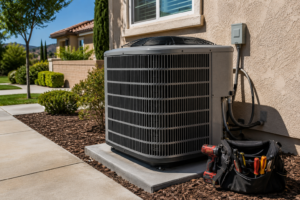
Your outdoor condenser coil has one job: dump the heat pulled from inside your home into the outdoor air. When that coil is caked with dust, cottonwood fluff, grass clippings, or pet hair, it cannot release heat efficiently. Head pressure rises, cooling capacity drops, and the air at your vents gets warmer while your energy usage climbs.
Homes in Moorpark, Newbury Park, and Simi Valley that back up to open space or agricultural land see this constantly. Walk outside and look at the condenser fins. If they are visibly gray or matted with debris, the coil needs cleaning.
You can gently rinse the coil from the outside with a garden hose after shutting off power at the disconnect. For a proper cleaning, which includes straightening bent fins and cleaning from the inside out, this is a standard part of a professional AC maintenance visit.
5. A Tripped Breaker or Pulled Disconnect at the Outdoor Unit
Your AC system typically runs on two circuits: one for the indoor air handler and one for the outdoor condenser. If the condenser breaker trips, the indoor blower keeps running and circulating air, but no cooling happens. The air feels warm because it is just recirculated room air.
Check your electrical panel for a tripped breaker labeled AC, condenser, or compressor. Also check the disconnect box mounted on the wall next to the outdoor unit. Landscapers and painters pull these more often than you would think.
Reset a tripped breaker once. If it trips again, stop. A breaker that repeatedly trips is protecting you from a real electrical fault, often a shorted compressor, a failing fan motor, or damaged wiring. That is a technician call, not a reset-and-hope situation.
6. Leaking or Disconnected Ductwork Pulling in Attic Air
This one is unique to how Conejo Valley homes are built. Most houses here run their ductwork through the attic, and in July, that attic can hit 130 to 150 degrees. If a supply duct has pulled loose at a connection, torn, or degraded, your system can be cooling air properly at the coil and then losing it into the attic, or worse, pulling superheated attic air into the airstream before it reaches your rooms.
The signature symptom: some rooms cool fine while others blow warm, or the whole house cools poorly even though the outdoor unit sounds healthy. Two-story homes in Thousand Oaks and Westlake Village with long duct runs are especially prone to this.
Duct leakage is invisible from inside the house, which is why it gets missed. A static pressure test and visual duct inspection will confirm it, and sealing or repairing ducts often produces a bigger comfort improvement than any equipment repair.
7. A Failing Compressor on an Aging System
If your system is 15 to 20 years old and blowing warm air, the compressor itself may be losing the ability to build pressure. A worn compressor can run and sound almost normal while moving too little refrigerant to cool effectively. Warm air, long run times, and a steadily rising electric bill are the pattern.
This is the diagnosis nobody wants, because compressor replacement on an older R-410A or R-22 system rarely makes financial sense compared to a full changeout. Before you accept that verdict from anyone, get a second opinion. We are not a commission-based company, and our technicians regularly find repairable problems on systems other companies condemned. If replacement genuinely is the right call, we offer free onsite consults for system changeouts and financing options to keep it manageable.
When to Stop Troubleshooting and Call a Pro
Here is the honest dividing line. Check the thermostat settings, the air filter, the breakers, and the condenser coil yourself. Those cover roughly a third of warm-air calls and cost you nothing.
Call a licensed technician when the outdoor unit will not start, the breaker trips repeatedly, you see ice on the refrigerant lines, or the system runs constantly without holding temperature. Continuing to run a system in any of those states risks turning a modest repair into a compressor replacement.
Get Cold Air Back Today
Stuart Rose Heating & Air Conditioning has been diagnosing and repairing air conditioners across the Conejo Valley, Ventura County, and western Los Angeles County since 1973. Our licensed technicians arrive in fully stocked trucks, complete most repairs in a single visit, and give you an honest diagnosis with flat-rate pricing, never a commission-driven upsell.
If your AC is blowing warm air, call (805) 590-4111 or schedule service online. We serve Moorpark, Thousand Oaks, Westlake Village, Simi Valley, Agoura Hills, Camarillo, and communities throughout Ventura and Los Angeles Counties.